


posted by Suzan Abrams, email: suzanabrams@live.co.uk | 23:14

Kafez
Literary
About Me

- Name: Suzan Abrams, email: suzanabrams@live.co.uk
- Location: Dublin, Republic of, Ireland
- Flown the nest.*Wordpress.*Please click on the wor...
- Continuing the Interview with Malaysian Novelist ...
- Remembering Frank McCourt
- Malaysian Author Tash Aw to Read at the Edinburgh ...
- A Short Interview with Malaysian Novelist Zaipah ...
- Beverley Raw's Telling Tales, courtesy of UKUnpubl...
- "The Gift", by Malaysia's debut novelist Zaipah Ib...
- A Gem of a Find: The Singing Top: Tales from Malay...
- The enigmatic and alluring Farah Damji
- An Interview with Leela Soma, author of Twice Born
- July 2006
- August 2006
- September 2006
- October 2006
- November 2006
- December 2006
- January 2007
- February 2007
- March 2007
- April 2007
- May 2007
- June 2007
- October 2007
- November 2007
- December 2007
- January 2008
- February 2008
- March 2008
- April 2008
- May 2008
- June 2008
- July 2008
- August 2008
- September 2008
- October 2008
- November 2008
- December 2008
- January 2009
- February 2009
- March 2009
- May 2009
- June 2009
- July 2009
- August 2009

Subscribe to
Posts [Atom]
Sunday, 16 August 2009
Monday, 20 July 2009
Continuing the Interview with Malaysian Novelist Zaipah Ibrahim, author of The Gift in the USA

 by Suzan Abrams
Here, I continue an interview I wrote up earlier on Malaysia’s debut novelist Zaipah Ibrahim who recently published a contemporary romance novel, The Gift, in America.
The earlier interview is over here or you could simply scroll down the page to read it. This is the first author photograph of the very cordial, pleasant and obliging Zaipah Ibrahim, on the web. The snap was shot at her school with her students in tow.
What stays special is that here she is standing tall among a stellar list of international writers. The Gift published by Muslim Writers Publishing USA, winds in philosophical ramifications with Islamic ideals. It may be purchased from several international online booksellers.
Perhaps Zaipah's unique accomplishment is that in the face of a stern competition among several hundreds of other aspiring Muslim authors internationally - and all bent on the same slice of the cake - Zaipah was accepted and published by a small press in the States even while she was already back home in Malaysia, during the peak of the recession last March.
Zaipah who has studied in the United States of America, is herself a qualified English Lecturer and is presently dedicated to teaching Malaysian children English. The writer runs a tutorial centre in her homestate of Trengganu; famed for its extraordinary array of cultural assortments, fascinating cuisine and scenic beachspots. The state is situated on Malaysia’s beautiful East Coast. The book cover excellently captures a similar scenery.
The Gift.
Zaipah Ibrahim
ISBN 978-0-9793577-7-0
Muslim Writers Publishing, USA
Paperback 292 Pages
Price: US$14.95
A previous article which introduces the novel is here.
The first part of the interview is here.
And now the rest of the interview.
Could you explain to other aspiring authors who may find you an inspiration, how you got published by Muslim Writers Publishing?
"Search for publishers that publish a genre you're familiar with. I found MuslimWriters America while surfing the net and later met some wonderful other writers of the Islamic faith. . Linda who is better known as Wihad, was the founder. It was only later that my manuscript was accepted by MuslimWritersPublishing."
Did you enjoy the working relationship with your publisher?
"Yes. I liked dealing with the publisher, Linda(Widad) and also the in-house editor, Debora McNichol. They are both efficient in their work and I was more then happy with the quality of the production."
Tell us a little about your tutorial centre.
"It's not the normal tutorial centre that offers all kinds of school subjects. Fajr Library is mainly for book publishing. I set it up when I self-published "Islamic Word Games". Then by chance, friends asked me to tutor their kids. So, I decided to offer English classes as part of activities under Fajr Library.
"Now I have about 40 students enrolled in both primary and secondary school English classes. Each class is made up of about 8-10 students. My main interest is teaching the primary school kids aged 8 and 9 years old. I do activities and play language games with them. I emphasize writing English sentences in fun ways. They enjoy learning English this way. Not all students have these activities at their schools due to large classes while some schools focus too much on exams, thus lots of exam practices!"
What do you find obviously different between the two careers of teaching and writing?
"Teaching is clearly more of helping the kids since English is the biggest problem among many Malay students in Malaysia. On the other hand, my passion for writing means sharing life's experiences and the perceptions gained from wide observations and happenings around me."
Could you tell us about your next book, The Gift II?
"I've always wanted to read (and watch a drama/movie) about AIDS/HIV victims from the perspective of Islam and Muslims - and in a positive way!
"I get bored of reading/watching the negative responses towards them. I wondered how a true muslim is supposed to face such an ordeal. So, I decided to write The Gift II (still a working title) which is the story of a young woman and her determined dream to become a journalist. However, life gives her more than what she bargains for.
"Through her eyes I want readers to follow the roads of life, love and loss as solely regards the disease. This, especially from the perspective of Islam as well. So much I learned from writing this novel in terms of knowlegde about the disease and the pain and the struggle to live with it among the people you love.
"Knowledge is power that gives you the strength when dealing with AIDS/HIV. Doing a research on AIDS/HIV while completing my M.A at SIU-C was unforgettable. The librarians were cooperative but I received some funny stares every time I checked out books from the Carbondale public library in America ....just imagine a woman wearing a hijab/veil and all she read was AIDS/HIV related books. :)"
When did you begin to write this?
"I think it all started at the end of 1997 but I completed the research by the end of spring 1998. The writing was done after I came home to Malaysia. At the time, due to a busy teaching schedule at the college, I couldn't focus on the manuscript. When I resigned in 2001, I put more hours into writing it."
Who is publishing your second novel?
"Telaga Biru - a local Malaysian publisher - will publish it. At the moment I'm waiting for the final letter of confirmation from them. They liked the manuscript the first time they read it but hesitated to publish it (due to the language being in English) until they saw the published version of The Gift. I was eager to send them a copy as requested and this paid off. Sometimes from wishful thinking, I do wonder if they would like me to translate the novel to the Malay language."
How do you feel about it all and where do you find the time for your promotions?
"Oh dear... I am too busy these days with teaching, so I just can't manage the time to do promotions of The Gift in Malaysia. At the moment, my promotions are all online. And yes, I'm still getting used to that idea. Whenever people ask for my signature, I feel strange and smile before signing the book. I can't help myself."
What are some of your favourite things?
"Due to a food allergy, I am selective of what I eat but I like trying non-Malay cookings as long as the food is halal. Right now Indian and Korean cooking are my favourites. I love the colours yellow, pink and turquoise. And as for flowers, they just have to be pink and red roses. At the moment, my hobbies are reading, writing, travelling and internet-surfing."
What do you love about Terengganu?
"The coasts! Only one word to describe them. Magnificent! It's one of Allah's greatest works of art! I become speechless everytime I sit on the beach waiting for the sun to rise. I watch a universal change happening right before my eyes! No matter where I go, I just cannot forget these beautiful natural view. Once upon a time, I loved jogging very early in the morning and would wait for the sun to rise. Nowadays, I don't get to jog much though I still try to catch a sunrise whenever possible."
The book cover features a lone figure of a Malay woman walking on the coast. Who designed it ?
"Linda/Widad told me the idea and I liked it. She had it designed and showed it to me."
And what about your family?
"I'm not married. I love spending time with my family esp. with my two little nephews."
How do you spend your writing days currently?
"I'm not writing much these days...still sifting through my many little notes but I'm planning to write more soon. Also, I'm writing some Islamic romance short stories at the moment. I have finished a few so far. Also, since my two novels The Gift and the other soon-to-published The Gift II feature serious and weighty themes, I plan to introduce elements of fun and laughter from the notes I mentioned."
Do you intend to visit America again?
"InshaAllah!" (God Willing)
Do you have any golden rule for aspiring Malaysian writers who have plans to publish abroad?
"Be honest and love what you write. Never give up and keep searching for the publishers. I believe there is one for each writer out there."
Do you have a favourite old Malay poem or folklore?
"I don't have one. The young Zaipah was such a big fan of mysteries and adventures. Even romance novels came much much later in her life." :)
Labels: Malaysian Fiction in English, Malaysian Novelists, Muslim Writers Publishing USA, The Gift, Zaipah Ibrahim
posted by Suzan Abrams, email: suzanabrams@live.co.uk | 16:06
Sunday, 19 July 2009
Remembering Frank McCourt
 by Suzan Abrams
I am heartbroken that Ireland's illustrious writer, Frank McCourt, who authored a bestselling memoir featuring a poverty-stricken Irish childhood, Angela's Ashes, has died.
My personal experiences are of having met and spoken to him twice, not too long ago.
Once was a signing at the Eason Bookstore on Lower O'Connell Street on a weekend afternoon, close to the Christmas of 2007. Having just published a seasonal picture book for children, McCourt was present to meet with fans.
He asked me where I was from. When he heard me say Malaysia; he talked to me a little about his time in Singapore, a country he had visited and thoroughly enjoyed. He asked me if I had been. He said that he had grown tired of travelling and just wanted to return home. He wished it could be Ireland. He kept saying he wanted to rest. At the time, he looked terribly frail.
I spoke to him again this February at the wonderful Emirates' Festival of Literature in Dubai. I was amused to see that the now buoyant McCourt was in jest a lot of the time. He had put on weight and seemed in his element, cracking jokes that came complete with his sarcastic wit and an array of sardonic quips.
He talked in length about how when he was a schoolteacher nobody knew or bothered much about him and that suddenly at such a late age, fame would hit overnight. How he regaled us with the comedy of a life well lived and learnt and too, his trials posed from aspiring authors who often posted him strange manuscripts for which he never knew how to comment.
We would all see how McCourt so enjoyed speaking to a full house in Dubai. How glad I am now that Emirates and Foyles had chosen McCourt for a select author invitation and that he in turn, had so cheerfully given his time to the festival.
McCourt was clearly in high admiration and respect for Orange Prize winner, the Nigerian novelist Chimamanda Ngozi's writings and also her observations on life. He was deeply interested in all she said and at a panel discussion, kept probing her thoughts on issues he himself felt compelled to comment on.
May the beautiful Frank McCourt's soul rest in peace.
Labels: Angela's Ashes, Chimamanda Ngozi, Frank McCourt
posted by Suzan Abrams, email: suzanabrams@live.co.uk | 16:26
Friday, 10 July 2009
Malaysian Author Tash Aw to Read at the Edinburgh International Book Festival August 2009
 by Suzan Abrams
If you're an ardent reader, Scotland's the place to be this August!
Glance through the detailed programme that's been elaborately laid out and styled - more the decorative element, I'd say for a coffee table glossy - and it's easy to see how this year's Edinburgh International Book Festival 2009 is truly a universal meeting of the minds. The festival carefully shapes a prism that reflects a monumental number of slants in which detailed subjects of authors, publishing, literature and writing may be delightfully probed and measured.
Many, many big names and also fascinating lesser known authors. Also, a fantastic schedule of children's book events.
Malaysia is represented by its most popular bestselling author worldwide of all time, Tash Aw. Aw who's currently in big demand for readings in several countries will talk about his newest novel Map of the Invisible World on Saturday, 15th of August at 4.30pm. His event which takes place at the Writers Retreat, is listed under the category of World Writing. Aw will share the spotlight with debut novelist Sulaiman Addonia's The Consequences of Love; a plot which draws on a forbidden romance in Saudi Arabia.
Singapore is represented by pioneer poet Edwin Thamboo and also the poet Simon Tay and the region's highly popular novelist, Suchen Christine Lim. All three will speak at 4.00pm on Sunday, 16th August at the Peppers Theatre. I've met and spoken to Suchen. She stays one of the most level-headed, friendly, humorous and unpretentious writers I know.
Another shy writer that comes to mind is Diana Evans who's also reading at the Fest and who I'm surprised has just had another novel out, which I didn't even know about. Especially too, that I had been waiting the longest time. I once sat next to Evans at a Tash Aw reading in London and she was extremely soft-spoken, gentle and pretty much the lovely soul.
One more humble author - but he's not at the Fest - is Vikram Seth. I've met Seth twice . Chatted with him once at Hatchards in Piccadilly's London and went to a reading another time at the South Bank. He is a very very funny man and enjoys holding an audience up in stitches for as long as it takes.
Here is the link to the Edinburgh Book Festival Programme. Do enjoy your scroll down as you gasp at all the lovelies..

posted by Suzan Abrams, email: suzanabrams@live.co.uk | 16:56
A Short Interview with Malaysian Novelist Zaipah Ibrahim, writer of The Gift
 Here is a short interview with Malaysia's debut novelist Zaipah Ibrahim who recently published a contemporary romance novel, The Gift, in America.
Standing tall among a stellar list of international writers, The Gift published by Muslim Writers Publishing in the USA, winds in philosophical ramifications with Islamic ideals. It may be purchased from several international online booksellers.
Zaipah who studied in the United States of America and is a qualified English Lecturer, is dedicated to teaching Malaysian children English. The writer currently runs a tutorial centre in her homestate of Trengganu; famed for its extraordinary array of cultural assortments, fascinating cuisine and scenic beachspots. The state is situated on Malaysia's beautiful East Coast. The book cover excellently captures a similar scenery.
A previous article which introduces the novel is here.
The Gift.Zaipah Ibrahim
ISBN 978-0-9793577-7-0
Muslim Writers Publishing, USA
Paperback 292 Pages
Price: US$14.95
A short interview with Zaipah Ibrahim by Suzan Abrams
When was the moment you knew you wanted to be a writer?
"I've always liked writing but never thought I would actually become a writer one day! I started penning short stories in *bahasa melayu (*the Malay language which is Malaysia's national language) while studying in the Second Form and just to share with friends. When I chose the science stream in the Fourth Form, I stopped writing altogether. Then a year later, while in the Fifth Form, my story was chosen by a teacher who read it to the whole class. At that moment, I felt a sharp desire to pursue writing once more but didn't.
"Later I studied computer science until I decided to switch to linguistics! It wasn't until 1996 /1997 that I seriously got myself into writing. I was in the USA doing my M.A at that time. I was searching high and low for an Islamic romance novel to read but couldn't find any... so I thought of writing it myself! I grabbed whatever free time I had to read books on creative writing...sort of independent learning. Slowly I drafted a manuscript and the journey finally began for The Gift!"
Did anything or anyone special inspire you to write?
"It was more a desire to provide quality Islamic fiction, especially in the romance genre.In Malaysia, romance novels in Bahasa Malaysia/Malay are very much influenced by Western literature in particular and this with regards to cultures and values and all...
I found very few novels in BM that reflected Islam as a way of life... in a non-preachy way that is. For me Islam owns its rituals just like any other religion would, but it is more of a faith that reflects a specific art on living a life. Unfortunately, I don't see this act being translated/incorporated into Malay romance novels or television productions like weekly dramas and serials."
Tell me something about family life in your hometown, Terengganu.
"I come from a big family...grew up with mom as house-wife...dad worked with the MARA shipping yard. Mom passed away years ago and dad now runs his own carpentory workshop. I was in standard 6 and 12 years old when i seriously decided to improve my English. Before that, i used to collect bad grades for the language. I had this teacher....teacher Safiah who made me love english... When I entered high school, there was a sudden tremendous improvement! Two teachers I will always remember....Madam Safiah and Madam Latifah! They offered a new meaning to the very idea of pursuing the English Language...lots of fun and possible to master!"
How was your love for literature influenced in your younger years?
"Libraries are homes for me. Morris Library (SIU-C) was a the best place in the campus! As a child my dad stressed the importance of reading (he used to say "people read books on buses, so you have no excuse to not read at home"). Slowly I picked up the habit. I just loved reading and the school library was heaven for me. I loved reading Aesop's Fables (in BM) when i was 8 - 9 yrs old. Later I was a big fan of the mystery series, Nancy Drew and the Hardy Boys...The Famous Five...all in BM... In High School I read loads of of Sherlock Holmes in English. But the romance novel? Ah well, not until finishing high school. Only then did I start reading novels by Danielle Steel."
What were your favourite storybooks as a child?
"As a child of course, of course it had to be the Aesop Fables....lots of lessons in morality to learn plus the happy endings and all wishes coming true. As for those mystery novels, I loved finding out how a crime was solved! I became really fascinated by all of that. Sherlock Holmes especially was a great character that left an important influence on me as a teenager..."
What did you study in the States and how long were you there for?
"I did linguistics for my B.A and TESL for my M.A. I did both at Southern Illinois Univ - Carbondale.For each course of study, I spent almost 2 years. For my B.A I completed 2 years in an MUCIA program in Malaysia before going to the States."
How did your writing develop when you were in the States?
"Completing my M.A was a lot of work, but my growing interest in writing made me strive to learn how to write. The internet too helped me explore the writing world and conduct research. When I came home I continued my research ventures at the public library in my home town."
You appear a prolific writer with initially two self-published educational books, a second novel almost ready and a third with notes on the go. How did such an event as writing The Gift 10 years ago come about?
"As I mentioned earlier, I badly wanted to read an Islamic romance novel. I read 'Cinta Madinah' by a local writer. It stayed close to the philosophical and religious ideals I was looking for but produced in the Malay language. I told myself to go ahead with The Gift! So, I gathered experiences from my life and of others I saw around me...Saleha, a main character, was my main focus at first and then came the others... Ani, Imran and Syakirah...all these characters suddenly became real to me.
"Due to a heavy teaching workload at college, I couldn't really focus on writing but I never stopped. I guessed that was the reason why it took me so long to finish, rewrite, polish etc...around 2003 I submitted the manuscript to a local (Malaysian) publisher but they were not willing to publish. Reason - a local romance novel in English would not well-received in Malaysia!
"I held on to the manuscript and began writing my second novel. The same thing happened to the second manuscript - no takers to those I submitted to in Malaysia because I wrote it in English! It was after 'meeting' Widad (Linda of Muslim Writers Publishing in the States) that The Gift finally began its publication journey. Still, on having observed my first novel now being published in America, a Malaysian publisher stepped forward to announce that they were willing to publish the second manuscript."
How was your everyday writing discipline?
"I wrote The Gift in my bedroom. Didn't matter whether it was in Malaysia or in Carbondale! But I have a habit of keeping a little notebook with me and I write down any scenes or ideas that come to mind wherever I go. So, when I sat down to write The Gift, all the little notes were with me.
"I would spend at least an hour a day on the manuscript once I managed a complete draft of the novel. I usually make up my mind on the ending right from the beginning. However, the beginning might change as the story proceeds.
How did you then start to properly organise your writing for even other pieces of work?
"Once I settled on a theme I would start keeping little notes. Right now I have a bunch of them for my third novel....I wrote a short note in my blog about this (www.polariswriter.blogspot.com). Once I have enough notes, I would sit down to fix all the pieces together. It's fun, really!Then I will write a draft....the big picture I call it. The plots come along as I begin writing later on. A lot of editing/polishing as the chapters build.
"I do have moods. That's why it's important to carry that little book. Sometimes I just sit down and type away with the notes beside me! Otherwise, I write reams of pages in longhand before anything else.Name a favourite book for the present time.
"I like tafseer (Commentary of the Quran) by the late Prof Hamka."And what are you reading at the moment?
"Dont Be Sad by Aaidh Al-Qarnee. The English version of 'La Tahzan'. A super book and very inspiring."What was a precious page or moment or chapter for you personally with regards to your own tale of The Gift?
"Pages 202- 203 (Saleha and Imran before their wedding) and page 254 (Syira and Imran on the subject of trust)."While writing The Gift, how vividly did the characters occupy your headspace?
"I practically lived with them. Laughed and cried with them. I was really sad when Saleha died. I felt so much for Imran's loss and wanted Syira to be there for him though they were still strangers in some ways. Love and trust were still missing at that point. And yes I did miss them when I finished that last chapter especially Saleha!."
Did your finished manuscript alter or inspire your individuality in any way?
"There are some things in life - good and bad experiences- that can be translated and shared in the form of fiction. After all there are always lessons to learn with every big/little episode in life. A novel is no different."Who are your favourite Malaysian authors?
"For fiction, I enjoy Abu Hassan Morad's talent. He wrote 'Cinta Madinah'."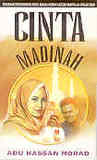
How do you feel about Malaysian fiction in English, making it in the world?
"I wish for more Malaysian fiction to be written in English thus getting international readership. But, the writers must have a clear vision why he/he wants to do this. For me, being a Muslim, I feel it's a duty almost to make use of what little writing skills I possess to contribute to the production of quality Islamic fiction. So far, my friends - both Muslims and non-Muslims - have enjoyed reading 'The Gift'. Also, never give up! Believe in what you write! One reader in the UK was happy to read The Gift because she just loved the story about Malaysians written by a Malaysian!
How important currently are friends for intellectual pursuits?
"Writer friends help boost my spirit to write esp. when I go through writer's block. Yes, I do have a few specifically in the Muslim Writers Group though we are all busy with other non-writing tasks at the moment. Generally, I tend to stay the solitary writer although I love getting comments from anyone in the writing world anywhere at all."
Would you see having experienced the dire writing process yourself that being published internationally is different from being published locally?
"Yes! I get more worldwide feedback. It's also interesting how people living outside Malaysia appreciate not just the story but the places and cultures presented in the novel."
Credit: Clip art of Sherlock Holmes, courtesy of Gnurf.Net.
Labels: Malaysian Fiction in the West, Malaysian writers, Muslim Writers Publishing USA, The Gift, Zaipah Ibrahim
posted by Suzan Abrams, email: suzanabrams@live.co.uk | 14:43
Saturday, 27 June 2009
Beverley Raw's Telling Tales, courtesy of UKUnpublished
 by Suzan Abrams
Should I say that self-publisher David Buttle's vision is a cool one? As cool as frosted ice on a cream cake? I'd be lying if I didn't.
At first, it just sounded too good to be true. Buttle who opened UK Unpublished for writers who wanted to see their work in print on a low string budget - and he explains how this miracle is possible on his well-laid out website - said he sourced his ideas all of 2006 and 2007 before volunteering to help publish a writer's book for as low as say, £200 (the average estimate) and if you wanted a design cover he knew just the right person - but add on another £100 and well...the fee may hover a bit up and down the stakes but depending on the number of pages...and not a total sum that would invite disgruntlement.
In the meantime, Buttle would secure you an ISBN code for those necessary online & bookstore retailers/databases and the rest would be up to you...
Of course, if you were wise, you would have your manuscript seriously edited and proof-read beforehand...
Well, to-date Buttle has successfully catered for three authors - he published them in March/April 2009 and there's always room for more.
I decided to order Beverley Raw's 188-page paperback, Telling Tales from Waterstone's Dublin without ado. I haven't yet read her collection of short stories but excerpts from Telling Tales, The Looking Glass, Old Beaky, Rendezvous and Daddy's Little Camper don't disappoint. There is a free-spirited Woodstock tone about the lot...and I am reminded of a Lynne Reid Banks' classic; The L-Shaped Room.
Raw is an artist and jeweller, living in East Devon and clearly over the moon with her discovery of writing joys in later years.
Well...she has good reason to be proud. The book is so beautifully produced and with such an enticing cover that it quite took my breath away.
Buttle made the right decision in using Lightning Source, currently the UK's foremost Print-n-Demand expert; also a faithful companion to Salt Publishing and YouWriteOn.com
What a glossy neat finish to the cover, a tidy, pleasant template to the interior and overall, a sharp, snazzy look. Beverley Raw has herself a gorgeous paperback with Telling Tales if only she would go to town a little on her promotions.
Together with Lightning Source as his choice of printer, Buttle shows up a thoughtful sophisitcated result that would triumph over many mainstream publishers of traditional print in Malaysia and Singapore alone. In this vein, I'll exclude Silverfish Books Kuala Lumpur and Monsoon Books Singapore for a superb quality that currently shape their respective title lists.
posted by Suzan Abrams, email: suzanabrams@live.co.uk | 04:34
Tuesday, 16 June 2009
"The Gift", by Malaysia's debut novelist Zaipah Ibrahim, published in the States
 by Suzan Abrams
A reliable Google search engine and a touch of common sense, tells me that with the exception of her family, friends, students and of course her publisher in the United States and online booksellers worldwide (do count Amazon Japan); few if anyone else in Malaysia currently know that one of their own; modest Malay writer and teacher, Zaipah Ibrahim from her homestate of Terengganu -Malaysia's luscious and scenic East Coast - recently published her first English Language novel, The Gift (ISBN: 9780979357770) with MuslimWritersPublishing in Arizona, America.
Ibrahim stands tall alongside other select international writers producing an eye-catching list of adult and childrens' titles that veer towards the philosophical and would in turn, create Islamic culture as a high point of intrigue for any curious observer.
Priced at £9.59 with Borders UK and $14.95 in the States and available at Barnes and Noble, the 292-page paperback, features a thoughtful if not heart-rending blurb, as easily reminiscent of MuslimWriterPublishing's head, Linda D. Delgado or otherwise affectionately known as Wihad's, poignant choices, as she aims to publish quality literature that heralds and celebrates Islam.
In this respect, Delgado says that she would soon break into other genres, including science fiction and crime for her submission lists.
Meanwhile, The Gift is described as a "love story set in exotic asian Malaysia.". It talks about a mother's last wish for her son, where in her feverish attempts at offering him a gift of a new life, the parent must bravely reopen buried wounds from an unresolved past.
As the novel's foremost thematic approach, The Gift - which represents an almost intangible object - would meander through timelines and lost episodes with the rush of a gushing brook. It would mark a mother's final handover to a son whose life can now be rebuilt where it was once torn from an ill-fated event. The Gift would then turn this young mother's face to her own parent, where through unfortunate circumstances, she had dismally failed to make her mother happy. The Gift would then once more serve as catalyst for the young woman and the dying mother's son to each triumph over their past, while fulfilling another mother's wish.
Zaipah Ibrahim, a graduate of Southern Illinois University at Carbondale in the US, worked as an English lecturer from 1990 – 2001 at the Sultan Zainal Abidin Religious College, Malaysia. She presently owns and manages her own tutorial centre, writes books and teaches the English Language in Malaysia.
Before Ibrahim's manuscript was selected for publication in the States, the author had self-published two other educational children's books Islamic Word Games Books 1 & 2, which were designed to introduce "basic Islamic terminology in English".
From a fellow Malaysian writer in Dublin, Ireland, many congratulations if you read this, Zaipah.
Labels: Muslim Writers Publishing America, The Gift, Zaipah Ibrahim
posted by Suzan Abrams, email: suzanabrams@live.co.uk | 19:44
Sunday, 14 June 2009
A Gem of a Find: The Singing Top: Tales from Malaysia, Singapore and Brunei by Margaret Read Macdonald


June 15: Look at the treasure I found, courtesy of accomplished American author Margaret Read Macdonald whose long list of works reflect sparkle, colour and fun! A secret chest too, I'll maintain and for good reason.
Several online booksellers in the UK, USA, and Australia including their respective libraries
have readily advertised and stocked the tempting 191-page book of tales (pictured), since it was first published by Libraries Unlimited in August 2008. Yet when I scoured the online web for two major Malaysian booksellers, the names of author, title and ISBN number all drew a blank.
As I skimmed quickly through Google, no Malaysian book blog seems to have mentioned it either with the exception of one as a tucked-away 'reading list' a few months ago. None popped up but then to be honest, this once robust scene has now dwindled to a trickle.
Still as a consolation, I doubt that Macdonald, the lively-spirited Fulbright scholar, children's librarian, author of over 55 print and audio folklore tales and the grand dame of storytelling would have noticed. Not when it sounds like she could be having herself a ball at this very moment, travelling the world. Studying the animated writer's illustrious portfolio on her cheerful website, nothing I write could possibly do her justice.
Dedication and pure passion spell the author's life work as she reads and acts the perfect role of raconteur at storytelling workshops, festivals, conferences and schools worldwide. Already, her calendar this year looks pretty full.
The Singing Top: Tales from Malaysia... is Macdonald's latest title. The writer who is expert in recording various ethnic folklore, sketches 15 Borneo tales in this anthology as part of a specialised World Folklore Series. Having a quick glance through the titles, it's easy to see that Macdonald has gathered all the right enriching fables that provide for an exotic and flamboyant Malaysian history - there are Malay legends and intriguing if not humorous stories of the sultanate as well as the wily, cunning mousedeer. Tales of orchards, princesses, curses and animals offer decorative plots for the rest of the fare. Accompanying novelties include colour photography, puzzles, games, proverbs and notes sketched alongside the tales. Having grown up with all these stories told us by teachers, friends and parents, while I was at school in Malaysia as a little girl, I can assure you there won't be a dull moment.
I will let you know more once I've read the book. I'm glad to see the title on Waterstone's database. I'll be along tomorrow to order it for sure, never mind that the hardback stands at the slightly steep price of £22. Already, it feels like a nostalgic heritage for me here in Dublin. I'll probably have a moment flicking through the beautiful tales and remembering my classmates long gone. But then I who never really stopped being the child, long for the excuse.
Photograph of Margaret Read Macdonald courtesy of MargaretReadMacdonald.com
Labels: Libraries Unlimited, Margaret Read Macdonald, Singapore and Brunei, The Singing Top: Tales from Malaysia
posted by Suzan Abrams, email: suzanabrams@live.co.uk | 18:44
Friday, 29 May 2009
The enigmatic and alluring Farah Damji
 by Suzan Abrams
This is an older blog. For a kinder arrangement of this interview, please go to my new Wordpress site.
An Interview with Farah Damji
The need for a fix of a sweeter kind; nothing more than the aromatic flavour of a good coffee roast is what spurs present-day writer, renowned socialite and *ethical fashion designer, Farah Damji, to wake up with a renewed zest at her Central London Westminster home every morning.Of course, she could always settle for alternative sensual pleasures. The legendary Julie Andrews’ flamboyant rendition in My Favourite Things from the absolutely merry Sound of Music may have done well to have encountered some of Damji's own assortments comprising a swift Chanel No.5 whiff, her childrens’ laughter and the shy scent of her little daughter’s hair and the very idea too, mind you, of “drowning” as Damji succinctly puts it, in her “son’s eyes.”
Then there are the simpler women magazine choice favourites like a row of plants sprouting up out of their window boxes, the happy sight of fresh flowers on a table, the smell of baking cakes, the feel of silk and perhaps most relevant of all, the satisfaction of a finished book.At the end of the day, Damji will look forward to being surrounded by her family, children, good friends and fresh flowers. Think parrot tulips for a moment. Damji adores their “weird organic shapes” and the strange way they completely “freak out” after a full bloom.
Damji also loves Nitin Sawhhney and is a faithful listener of Belle Humble, a North London-based singer whom she suspects may seriously give Lilly Allen a run for her money even if the former hasn’t yet achieved her breakthrough.Naturally, Damji can afford to be contemplative and daring in her thoughts. These are after all, exciting times in the socialite's life pictured in an ironical upside-down fashion; very much if you like, the calm after the storm.
Damji has come through and survived unscathed a series of traumas, international scandals – some of them unjust - and accompanying crimes; not a pretty story but nevertheless, old demons must still be faced and conquered so there you go.Now, the Uganda-born former editor and publisher of a once stylish magazine in London, is to reveal all, in her sizzling brave autobiography Try Me to be published by the Ark Press in early July. Fifteen percent of the author's royalties from the sale of each book will be religiously donated to Madonna's charity, in the Raising Malawi campaign which helps over 400 000 orphans annually.
"...I don't see myself as a catalyst for justice truth or ointments but simply as a woman who wanted to tell her uncut, uncensored story. Writing was the first most direct way to do that."Hers is described as a revolutionary story and a study in paradox by the charismatic writer and columnist Nirpal Singh Dhaliwal. The plot stays devoid of the usual soppy melodramas that habitually tail the Indian immigrant nostalgia – a quality of formula writing that many South Asian writers may have happily settled into, like a pair of old bedroom slippers.
In this instance, Damji who uses her love for writing as a “passionate bug”, begs to differ.
“Writing is the most effective means to convey a message,” she explains. “It's longer lasting than TV, more efficient than radio, it's forever. I don't see myself as a catalyst for justice truth or ointments but simply as a woman who wanted to tell her uncut, uncensored story. Writing was the first most direct way to do that."
At the moment, a writing ritual is confined to the controversial Damji as to just where the mood “takes her.” She is re-reading Naipaul where she may convince herself yet again on the brilliance of the Nobel Laureate’s writings. Simply put, her logic is simple. “He captures the heart of the exiled and is not for the squeamish.” she enthuses.Damji who holds VS Naipaul. JM Coetzee. Boudiccea. Lady Godiva and Modesty Blaise to great admiration, is also reading Rumi translations, another literary endeavour that resonates the senses, but not those by Coleman Barks.
To any reader, who opens up to the first page of Try Me, Damji would plead, “Keep an open mind and an open heart.” And please. There is good reason for this.It didn’t help matters that both the Google search engine which may prove overly-efficient at the worst of times and Wikipedia who labelled the once convicted lady an “international fraudster” may have also offered no help at all in soaking up fabricated, deeply exaggerated and in many cases anonymous accounts of what really went on in Damji’s life some years ago.
Now, the fair-minded observer can expect more than just what promises to be a riveting read of homespun truths designed to knock the socks of many.With Damji’s devil-may-care attitude, the dangerous thrill of scintillating gossip in American and European high society and this promptly laid in contrast with the sharper somber aptitude of deep reflection that summed up daunting prison life first in New York and then England, awaits like a burning summer read.
Be warned that Try Me will be all about the book you can’t put down or won't want to.Besides the autobiography, established filmmaker Farrukh Dhondy of Lucid Pictures will adapt Farah Damji’s book for the screen. The screenplay is currently a project in the making.
Here now are candid answers to a delicious interview on the necessary personal things the web forgot to record on the real Farah Damji as you may not know her. The simple, everyday things that beg to hold no judgement or puritanical hauteurWith her caustic well-humoured wit, the answers below reveal truth carefully wound into one individual’s resurgence of a new life in the making.
In my own erratic conversations with Farah Damji, let it be known that I have found the writer to be on occasion easily forgiving in that old-fashioned and warm-hearted, "never mind, don’t worry about it" way.
*********
On Writing and Publishing
Explain your current working day.
“At the moment, I’m still focused on getting my life back on track. At this stage, I work a lot on my book and help formulate marketing ideas with my publisher who is also my public relations consultant. We do this quite a lot together.
“I’m also talking to bookshops with the possibility of doing book readings and author signings. I’m lucky that I do have a lot of autonomy with my publisher on subjects like paper quality for instance, which I may not have had anywhere else.” – FD
Who publishes Try Me?
"The Ark Press in July 2009."
How did you discover your publisher?
“I didn’t. They discovered me. And it was a perfect fit. I dumped a “big book deal” because I was put with an editor I couldn’t stand. A young British Asian girl was handed my manuscript to work on. She thought the contents too shocking and insisted I edit out huge chunks of my life. I refused to do this.
“This was after promises made that they loved the book, loved my writing, were fully behind it etc. What they really wanted was to package it and add it to the inane silly Indorbit chick-lit books out there that hold a limited audience and an even more limited world-view.
“Then came Mme. Amita Mukerjee of Revenge Ink who again loved it, wanted it etc etc but had her own agenda.
“Amita and I parted ways in March when it became clear to me that she wasn’t capable of publishing Try Me.
“So when The Ark Press got in touch to ask if I would like to be their first book, I jumped at the chance. Because they too are new, this stays an important title to both parties and I am getting all the attention I could only dream about.
“The Ark Press’s next title is to be Holy Bull; a work of non-fiction that discusses fraud in Indian history. It is written by the historian Roddy Matthews, who challenges the East India Company's version of history as perpetrated by the unfortunate bastard children of the Raj, Willie Dalrymple, Salman Rushdie etc.
“Apart from the general destruction of Dalrymple's perspective Matthews points out ludicrous errors. For example, he writes that William Fraser left Calcutta and sailed down the Ganges in a steamboat for Delhi in the reign of Shah Jehan in 1704. He might as well said he took EasyJet because there were no steamboats at the time. Their other books include an unpublished monograph by VS Naipaul and Farrukh Dhondy's brilliant book, The Bikini Murders, which he denies is based on the true story of Charles Sobraj. I’m in excellent company.”
I remember an anonymous page and one easily visible on the web where the contents stress that you had “dumped” Mme. Mukerjee as she turned out to be nothing more than a vanity publisher. At the same time too, RedHotCurry.com mentioned your supposed online war with a publisher.
“I have nothing to do with Amita Mukerjee anymore. I wish her luck in anything she attempts but I don’t wish to be involved with vanity publishing. RedHotCurry.com never spoke to me.”
How would you accord discipline with writing now that time and freedom are your own?
“I waste far too much time and then I kick myself for doing it. But people around always tell me they can't believe how much I get done. Little do they know...”
What do you expect the reaction to be towards Try Me? What do you stay prepared for?
“Incidentally, I didn’t write it for a reaction. The truth might be painful but can be instructive, cautionary and might assist people to assess others more accurately.”
What would you say to any stubborn observer still sceptical of all your experiences and brutal reflections?
“I don't care. Maybe I should but have never lived my life worried about what people think. .I am not the sum total of the opinions and reflections of me, I have, finally some sense of who I am, devoid of all the hype and hysteria and hate.”
How would you view diaspora Indian writers in Britain or worldwide? Think Jhumpa Lahiri in her new contemporary literature as opposed to the views you held in 2004?
“People like Jumpa Lahiri write Green card misery memoirs. If they hate it so much why don't they go "home?" I think Indian diaspora writers are expected to write a certain way, the men will always be compared to Salman Rushdie, the women to Arundhati Roy although in reality both were one-hit wonders. What people like Rushdie do is make a joke out of degraded civilisations. I don't think that it is funny, I think it is sick.
"Why should we be dictated to about what we can write? Why should we produce simply formulaic books? But there are women breaking out of the mould.
“I admire Naseem Rekha's style and I like what I have read so far from her book, The Crying Tree. She sketches this from a global perspective especially about "dark" issues such as murder. But then I am not up to date anymore with what these "DIASPORA" people are writing.
“I tend to read what I know I am going to love and that tends to come from recommendations. Life is too short to read a book I am going to think later "God, what a waste of time." I want to read books about people whose vision I want to peek into, a bit like a peeping-Tom, so there has to be something there in the first place to attract me to them or their writing.
On Damji’s Autobiography Being Turned into a Film
You said earlier on the web that you were working on a film proposal. Can you tell us more?
“It's being packaged by Lucid Pictures in the UK who are also doing Naipaul's Bend in the River and Howard Jacobson's Kaluki Nights. There are producers attached, Farrukh Dhondy is the Executive Producer (his credits being Bandit Queen, The Rising & Red Mercury)”
How do you reflect on the very idea of your controversial story being turned into a film?
“I love it. Who wouldn’t?”
How do you expect the film on the story of your life to define truth in a way that would be obviously different to the writing craft?
“I think films based on biographies are just a facet of the truth, in the way books are another facet of the same truth.
“I see the book as a launching pad for the film and not a line-by-line interpretation of what happened. All the book does is offer themes but a good writer and director will work to make these interesting to a viewing audience and to keep their attention for two hours at a stretch.
“A book is a different engagement, it's a longer commitment of time and energy in a way. You expend more of yourself by reading a book than by watching a film so it takes a different set of skills to be able to make a great film than to write a good film.”
Who would you in a surreal dream have liked to have directed a film based on your autobiography?
"There are too many great directors out there but two favourites are Guy Ritchie and Stephen Frears.”
Who would you like to play you in a cinematic version of your life so far?
“Angelina Jolie.”
How great a participation would you expect to hold in a film made from Try Me?
“If Farrukh is packaging it, then none. He is a control freak but also my best friend and the most ruthless writer and honest critic I know. I trust him, which is why the film went to Lucid Pictures.”
Are there particular films you enjoy for their execution?
“Dangerous Liaisons, Doubt, Rocknrolla, and Damaged. All cleverly written and directed to leave a gap for the viewer to come to their own conclusions about morality, betrayal, family, society. "
On Signing Off
With adventure, drama and experience in your hand, what do you consider to be the most over-rated virtue and why.
“Discretion: which I see as a coward’s way out.”
How do you view yourself as an individual today?
“A work in progress.”
Besides the film proposal, what stays your next writing project or have you already started work on another book?
“Just thinking right now about a second book, which would be a novel. Mine is a two-book deal so I have to come up with something pretty fast!”
Have you thought about returning to edit a magazine? Especially that once before you were recognized for this.
“Been asked but not interested. Dead Wood Media is approaching extinction. With print-on-demand and news websites giving us the information we want at our fingertips, who needs them anymore?
“Of course there a few magazines left worth keeping around. Vanity fair, Harpers Bazaar, The New Yorker but they exist to continue their own legacy and are supported by those who live / subscribe to the dream. It's a very different world.
*********
*Farah Damji is the owner of Moksasurya.com. Please click on link to be impressed by what is said to be the world's first luxury eco-brand in fashion.
posted by Suzan Abrams, email: suzanabrams@live.co.uk | 22:26
An Interview with Leela Soma, author of Twice Born
 By Suzan Abrams
This is an older blog. For a kinder arrangement of this interview, please go to my new Wordpress site.
Captions include Leela Soma and scenes from the window in her writing-room.
Introduction
Last year, Indo-Scot Glasgow academic turned writer, poet and performer, Leela Soma, published Twice Born with independent press, YouWriteOn.com in London. The title is said to be Glasgow’s first literary work of fiction spelling out a South Indian emigrant’s journey to Scotland.
Soma whose stories and poetry appear to have taken off like the wind, described her earlier academic life as a wonderful career, one that was sometimes “deeply rewarding and at others, difficult and strenuous.” In contrast writing has proved luxurious and fantastic, she says. In Soma’s own words, “...the passion for getting a sentence right is deeply satisfying just as meeting up with an old student.”Twice Born took at at least 2 1/2 years to complete. More details of Leela Soma’s accomplishments may be found on her website and her blog.
On June 4th the novelist launches Twice Born at Borders, Glasgow.
More details of the event may be found over here.
Do click here to read my review of Twice Born.
Here are some personal insights on Madras-born Soma’s everyday writing life.
**********
A Day In The Life
Leela Soma’s favourite colour may be blue and memorable scenes will stay of a moonlit night on Madras beach or of holding her infant daughter for the first time. Nothing beats the latter, she insists.
But in everyday life, Soma prefers an early rise and it is the sunshine she considers her best spiritual uplift. In her own words, she loves getting up to a “bright day” as it “fills her soul with joy”.
Leela Soma describes herself as a friendly and chatty person, intent on social activities. “I need people,” she enthuses. “I hate being on my own except when I need space to think or write. Ocassionally I get moody and annoying but snap out of it soon enough. I love chocolate and snacking on them ruins any work out at the gym.”
In retrospect, her dawn energy stays motivated by a quiet reflection. Often, she steadies her glance at a remembered sister’s present: a photograph of her parents which she considers beautiful. Each morning, Soma wills their love and dedication to set her up for the day.
This to be soon followed by a “good cup of tea”, tuning into Radio 4 and checking her emails.
Mid-morning will find her at the local gym – the first class starts at 9.30am – for a series of low-impact exercises or a swim. Then in her own words, “a lovely coffee with really good friends at the gym at least four times a week.”
The afternoon will see her with the Times crossword and this followed by two to four hours of writing or reviewing her stories.
Soma may write up to four hours each weekday but none at all on the weekends; which she marks as a sacred interlude. She confesses to a room with a view. A window overlooks a woodland scene. The room is quiet, and made up of her computer, accompanying paraphernalia, a library and a puja - hindu prayer table - at one end. Her ritual would be to sketch ideas on paper first as “small notes to herself”. This to be followed by writing straight onto the computer.
There’s no denying that after cooking the evening meal, Soma would like to put her feet up with the “good odd, tv programme” or otherwise Coronation Street but as she views the full literary scene in Glasgow with excitement; is often off to “various book/creative writing events.” She also wishes the theatre was more affordable.
Later, she will wind down with a pile of books at her bedside table including some old favourites. At the moment the writer is bent on reading David Eggers. 'What is the What' -in USA revolves around a story of the Lost Boys of Sudan.
“I can read it in small doses as the scenes depicted of Southern Sudan, the suffering of the young children and the ongoing Darfur catastrophe is relentlessly heart wrenching. Unless we read it we can never understand and have empathy for such dreadful wars in the world,” she observes thoughtfully.
Alexander McCall Smith stays a favourite author and Soma consider’s , Barrack Obama's ' Dreams from My Father to be a "superb read”. *More details of her favourite book collection may be found in the questions and answers session below.
"In the UK apart from the literary giants like Rushdie, and Booker prize winners like Arundathi Roy, Hanif Kureshi and Adiga there are few that reflect the life of an ordinary English or Scottish immigrant."
Today, May 29th has to be a near perfect day for Leela Soma. As she answers these questions in her study, the sun is shining and Glasgow seems at its best.
She soaks in the long summer day as “golden, glowing” and with an atmosphere that makes one “feel blessed to be alive.” She would already have had a wonderful lunch with friends, her daughter would have just returned home from America and her husband has finished cutting the grass. The lovely turned-out garden will command Soma to feel at peace with all the world.
On Writing.

How do you consider living the writer’s life in Glasgow?
“I do have a very good novel buddies group and a writing partner and I value both their input. We try to meet up regularly and offer a comprehensive critique of each other's work. I also belong to a Writers' Group who have wonderful speakers from the writing world. I don’t have a favourite café as such but meet with fellow writers at various cafes in Glasgow.” - LS
Are you still writing your second novel?
"Yes, definitely. It has been on hold for the vacation but will get back to it in earnest after the launch." (Soma recently traveled to Canada and the United States of America.)
How do you presently work at your second novel?
"It has an outline and I work away at it, but sometimes the characters take it to a different path or a twist that makes it more interesting."
Where do you derive your ideas for plots from?
"I have a list of a few ideas that I feel strongly I must write about, as a short story or a novel depending on how it pans out. The second book is a strong reaction to a photograph in a newspaper.You'll understand once the book is completed."
Having presented Scotland's first Indian emigrant story in print, what does that say for you personally?
"For years while I worked fulltime I always felt that there was nothing in mainstream literature in Scotland about an Indian immigrant experience. There is an enormous literary output in USA and Canada with authors like Jhumpa Lahiri whose work I admire.
"In the UK apart from the literary giants like Rushdie, and Booker prize winners like Arundathi Roy, Hanif Kureshi and Adiga there are few that reflect the life of an ordinary English or Scottish immigrant. I also want the next generation to be enthused and get into the mainstream and make our stories as valid as James Kelman in Glasgow or Alan Bennett in England. It is definitely an exciting time and hope many more writers contribute to the Scottish literary scene."
How do you view the worldwide web in general in its place to help the new author progress in today's fast-paced competitive world?
"I wish I was internet savy. I consider myself still a technophobe. I am still learning. The world wide web is a superb opportunity and it must be used by emerging authors for learning about new writing, for research and of course for marketing."
On introspection, how would you sum up an industrious but independent publicity for your book and stories?
"Unless you have been fortunate enough to get a big two-book deal from a big publisher, who provide all the publicity, all others have to be involved in their own marketing. There is so much to learn too about the book trade.I have friends who have been published by small presses and all of them have said that the only way to promote your work is to showcase the work as much as possible."
Do you have any author you'd like to aspire to?
"I have no great illusions that I would be good enough to reach such heights but Arundathi Roy's prose in the 'God of Small Things' rose out of the page and assaulted all one's senses and Salman Rushdie's 'Midnight Children' when you could almost smell the pickle factory.I would love to be able to reach that standard."
What were a few things that gave you a real buzz at the London Book Fair recently besides which you've already mentioned on your blog?
"Market focus India was wonderful at the LBF. The fact that in such times of a crisis with the credit crunch plus with all the visual media alluring the young involving elelctronic games and dvd's for example, the fact that books are still so important to the reading public is encouraging.
"The espresso machine printing books and the ebooks are the future even though I am sure that they will never replace books as we know them. I still remember fondly the book lined study of my dad and grandfather and the smell of old and new books and the joy of holding them, reading them and being transported to another world. That still holds true and LBF was a testimony to that."
*Like the fictitious character Sita in Twice Born, do you own a collection of well-thumbed and sentimental classics in your home?"
"I have an eclectic collection and also read voraciously from my local library.There are some classics like Shakespeare, all of Anita Desai's R.K. Narayan, some Rushdie and Scottish authors from Burns to Alaistair Gray and a lot of new writers from all over the world.
"I love Chimamanda Ngozi Adichie's novels that were called Half of the Yellow Sun and Purple Hibiscus. But the book I treasure most is the Bhagavad Gita, my dad 's copy and I read it a lot, dip into it very often. I am also reading Thirukurral again as I am doing a review for Penguin India Classics."
What happens with your short stories that you plan to turn into a collection?
"I do have eight short stories, ready and waiting to be published. The stories deal with life in Glasgow. Any publisher interested should call me now!"
Where do you see yourself heading as a writer in the near future?
"I hope to get my short stories published. Then complete my first draft of the second novel. I also write poetry for pleasure and if it is enjoyed by others, would like to raise money for charity from my poems as I did with my first collection From Madras to Milngavie. I write because I want to and enjoy the process of getting my thoughts on paper that is an accomplishment enough for me."
Do you have a tip for aspiring authors?
"Read, read , write ,write as Natalie Goldberg and others say. Write every day even for ten minutes, even if your words are never going to be used. Enjoy what you are doing. Write with passion.Network and have a writing partner or group who can help evaluate your work. Do other things that you enjoy too.
How do you feel about your upcoming Borders launch?
"If you had asked me a year ago if this was possible I would have have been surprised. I am looking forward to the launch, both with excitement and a bit of trepidation as any new writer would be."
What was your most remarkable moment while writing Twice Born?
"Perhaps when Aunty BB, the novel's notorious gossip and a total figment of my imagination, started taking over the plot line. I realised I could invent a whole new series around her. Maybe I should; recalling the horrors that she inflicted on the community in her inimitable way."
Did you expect the positive reactions so far garnered from Twice Born?
"I am thrilled with the wonderful feedback from all who have read the book. Many have asked if I am doing a sequel. It has really made me want to do better with my next book.

posted by Suzan Abrams, email: suzanabrams@live.co.uk | 22:23
Twice Born by Leela Soma
 by Suzan Abrams
This is an older blog. For a kinder arrangement of this interview, please go to my new Wordpress site.
*Twice Born a debut novel by Leela Soma and the first work of fiction to highlight a story on Indian emigration to Scotland, will be officially launched at Borders, Glasgow on Thursday, 4th June 2009 from 6.30pm.
Twice Born, a broad and glossy 3-layered colour plus 240-page paperback, by Glasgow academic turned high-spirited writer, Leela Soma - photograph provided in link - and beautifully produced by YouWriteOn.com in London; may tickle your senses to the alluring idea of an etheral beauty lived and not imagined.And why not when this reader on long closing the last page to the unexpected novel, would wistfully be reminded of shiny brassware and gold earrings, the close rustling of silks and lingering scents or otherwise too, of a frangipani whiff, exotic Indian sweetmeats and long graceful sarees enough to rainbow up a musty wardrobe somewhere in the middle of a cold, grey and rainy Scotland.
It is after all fitting that Soma herself a stalwart emigrant to Glasgow while still in her exuberant twenties in the Seventies; and now recent winner of the Scottish Margaret Thompson Davis prize for the submission of the first 10,000 words of a novel, continues to weave with deft clarity, a simmering plot; in her gentle cordial style, as one would subject a vintage handloom to the creation of a painstaking garment.
The riveting story of medical student, Sita who arrives in 70's Glasgow, with her new husband, Ram a medical practitioner, tempts the reader on a challenging head-to-head emigrant journey featuring rows of slightly ramshackle old housing estates in Glasgow, before the city's eventual and fashionable facelift would beckon the tourist.
Throughout the whimsical tale that traces Sita's birth in a respectable Brahmin household in hot dusty Madras (now Chennai) to her happy if not questioning childhood and later, an arranged marriage, the determined voluble Sita will pursue the risky vulnerabilities of a rightful romantic endeavour that appears sadly elusive even if she is determined that it must stay liberal, when measured against the dour silence of her politically motivated husband, whom Soma moulds as a distinctly likeable character.
For this supplementary plot alone, the reader is encouraged to soldier on an emigrant's emotional and sometimes painful if not vibrant journey seen for the first time through Soma's own eyes of Glasgow's sadder face, apparent three decades ago.
Here is a story written by no fledgling who rolls up her sleeves for armfuls of research to an imagined past but rather the voracious gathering of a life lived, learnt and considered priceless by Soma herself.
In a web interview, she will talk for instance, of her shock at seeing clumps of butter being rolled up in sheets of paper at the grocery store when first moving to the Glasgow suburbs and this in alignment with a fictitious episode in the book.
However, even a romantic affair and the security of a stable Indian marriage carefully arranged by the respective families back in India and accompanied by the usual colourful protocol that decorates tradition; must now take second place to, the picture of the ambitious professional couple in Scotland whose every cantankerous personality trait and domestic upheaval are traced like the imminent lines to a watchful painting, pressing humorous and adaptation skills in a foreign setting. And then that too, that must play second fiddle to Soma's more important message which is that of Scotland's unsettling emigrant history and tradition.
How cleverly as only an experienced veteran is capable of rightful observation, are the temperance of social cultural and interactions skills delicately balanced into a superb waltz and this too, while the tune is conjured up by Soma's capable hands, how gracefully indeed do each of her characters tiptoe the risky tightrope all the way to the end of the plot without crashing on the trampoline or losing focus of their rightful roles while dipping into social interaction formalities that may bear happiness or contentment.
There is Sita's daughter, a diaspora Indian of the UK, her dutiful parents, relatives and servants back home and shaded by a life of heavy rituals and easy living. Plus, there is the vital expatriate Indian community which consist of her best friends and also the disruptive gossips, tragic skeletons in the closet and rivalries which ardently match tooth for a tooth and eye for an eye. There's no denying that Soma asks all the sharp pertaining questions that lends itself to the curious idea of an arranged marriage and comes up with intriguing viewpoints.
Soma masterminds every adventurous chapter with a honeyed smoothness for swift detail and explanation.
She is expert at shifting a reader's mind between two continents at the blink of an eye and then with equal devotion, blending history with the present or commanding one character's life to be intricately webbed with the other. Soma holds a clear talent for turning Twice Born into a kaleidescope series of film reels that may akin the entire book to an enthralling screenplay bearing exoticism or one that may heighten the reader's imagination to the the surreal from what may have otherwise been nothing more than ordinary detail.
Throughout, Soma stays adept at a case of show-and-not-tell that depicts the struggle of many authors. Her easy manouvering of a character's vivid personality traits may later be recounted as memorable. For instance, Sita's husband, Ram who is an excellent cook and possesses eccentric habits with the preparation of his mealtimes, allows Soma to turn the tables onto Indian cuisine with appearing patronizing to the reader.
She is also brilliant at using present-day images like the sound of a crashing plate or a nostalgic turn of a photo album page to shift the reader's mind into an exposition scene featuring an earlier time and a different place. Lest this appears predictable, she then reveals her competence at drumming up minor dramas that may surround the crashed plate or photos like Ram's sulkiness in not wanting to share his memories as he hurriedly returns the photo albums to their rightful corners.
This reader, particular enjoyed another execution aspect of show-and-not-tell where on first arriving in Glasgow Sita turns on her radio channel to Radio 4 and is straightaway amused at the prospect of a talk show on ferrets which recounts how British a programme it is. She immediately compares this to a scene in India which clearly marks cultural differences and labels her foreign territory with ease.
Like an accomplished travelogue, rich and rustic pictures are painted of tradition and ritual, of customs and celebrations of lands, town, cities and villages in India. And then too with the same slick acumen, the kind and darker sides of Glasgow are captured with no less a celebration.
The only weaknesses were minor and could be easily adjusted, in case a reprint is ever called for. Where characterization is concerned, perhaps if Sita's husband Ram had demonstrated in the early chapters an intense emotional relationship with his aunt who would later die, the reader might have been allowed to mourn with the character...instead of having to recount scenes as sterile.
Another older Pakistani character, Dr. Faraz who abandons his young cousin whom he was forced to marry in Scotland for another young Scots nurse reflects a clear stereotype or rather facade of a predictable and by now after so much media entertainment in the UK, slightly stale portrayal of a muslim story, when thousands of modern muslims are easily far more liberal than Dr. Faraz. In the end, the reader felt the gossip's lesbian daughter to be another thorn in the flesh as this character too, easily appeared as an additional separate stereotype.
In this way, the ambitious Soma appeared overly-eager in tackling one too many controversial issues at the same time.
Also, a final proof-read and edit check would have been apt as there were several conjunctions and prepositions missing and these topped with words often written in the colloqial rather than with the spit'n polish attributed to a professional slant that makes for any sophisticated prose.
Of course, these prove minor in comparison to the real knowledge that Soma had attempted a major feat with her storytelling and passed with flying colours. She is a delightful promising raconteur, a considerate entertainer and has with keen industrious fortitude shaped Twice Born to be a valuable contribution to Scotland's immigration history and too, a slice of its recorded memory.
Twice Born if pursued with the right awareness and publicity, will most likely be hallmarked someday as an elegant symbol of Scotland's immigration story with a view to history, heritage and a diverse cultural belonging important and necessary to all the new generations that follow. Here then by Leela Soma and served so deliciously for you in the warm evening glow of a room, as a nightcap or an ornament for the bedside table is Twice Born, the real thing.
Be warned that you may just as well catch the sudden smell of camphor at the turn of a page or hear the lashing rain and long low whistle of a mischevious Glasgow gale while caught up in a flamboyant dance outside the window pane.
posted by Suzan Abrams, email: suzanabrams@live.co.uk | 21:32